
You’re driving home after dark when a vehicle pulls up behind you with headlights that feel like they’re shining directly into your eyes.
Or you’re on a two-lane road and every approaching vehicle seems brighter than the last.
If nighttime headlight glare bothers you, you may have wondered: Can window tint reduce headlight glare at night?
Window tint may help reduce some of the perceived brightness and glare entering through certain windows, depending on the type and darkness of the film. But darker isn’t automatically better — especially when nighttime visibility is already a concern.
For Massachusetts drivers dealing with dark winter commutes, rain, snow, and increasingly bright headlights, choosing window tint requires balancing comfort with visibility.
Here’s what to know.
Does Window Tint Help With Headlight Glare?
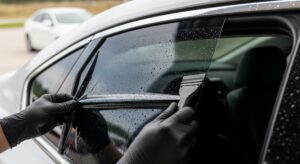
Window tint can reduce the amount of visible light passing through automotive glass, which may make bright light entering through tinted windows feel less intense.
This can be particularly noticeable with headlights coming through your side or rear windows.
However, how much of a difference you notice depends on several factors, including:
- The type of window film
- The film’s visible light transmission (VLT)
- Which windows are tinted
- Your vehicle’s existing glass
- Where the glare is coming from
- Your individual sensitivity to bright lights
Tint shouldn’t be treated as a guaranteed solution for difficulty seeing at night.
If you’re experiencing significant nighttime glare or changes in your vision, that’s a separate issue worth discussing with an appropriate eye-care professional.
Does Window Tint Help With LED Headlight Glare?
Modern LED headlights can appear particularly intense to some drivers.
Vehicle height, headlight alignment, road elevation, weather conditions, and the distance between vehicles can all affect how bright another vehicle’s headlights appear.
Tinted side and rear windows may reduce some of the visible light entering through those windows.
For example, if a taller SUV or truck is behind you and its headlights are entering through the rear or side glass, tint may make that light feel less intense.
But tint doesn’t change the headlights themselves, and it won’t eliminate every source of glare.
Will Darker Tint Reduce Headlight Glare More?
This is where things get tricky.
It might seem logical that if some tint helps with bright lights, extremely dark tint must help even more.
But darker film also reduces the amount of visible light coming through the glass.
During the day, that might not seem like a major concern.
At night, however, you need to be able to see vehicles, pedestrians, cyclists, road signs, driveways, and other objects outside your car.
Reducing too much visible light can make those things more difficult to see.
That’s why choosing tint shouldn’t simply be a matter of finding the darkest film possible.
What Does VLT Mean for Night Driving?
When comparing window tint, you’ll frequently see the term VLT, or visible light transmission.
VLT describes how much visible light passes through the window and film combination.
Generally, a lower VLT means less visible light passes through, creating a darker appearance.
A higher VLT allows more visible light through.
VLT is important because the darkness you see from outside the vehicle isn’t the only thing that matters. You also need to consider what you’ll be able to see from inside the vehicle after sunset.
Professional tint selection should take both appearance and practical visibility into account.
Can You Tint Your Windshield to Reduce Headlight Glare?
Be careful with this one.
Windshield tinting is subject to specific legal requirements, and you shouldn’t apply dark film across your windshield simply because headlights bother you.
Your windshield is also your primary view of the road.
Reducing too much visible light through it could negatively affect your ability to see at night.
Massachusetts drivers should make sure any window film installed on their vehicle complies with applicable state requirements.
If glare through the windshield is your main concern, talk with a professional about appropriate options rather than assuming darker windshield tint is the answer.
What About Headlights Coming From Behind You?
This is where window tint may be especially appealing.
Bright headlights from a vehicle behind you can enter through the rear window or side glass and reflect off your mirrors.
Tinting those windows may reduce some of the brightness entering the cabin, depending on the film used.
Your vehicle may also have other glare-reduction features.
Many modern rearview mirrors have an automatic dimming feature, while traditional mirrors often have a manual nighttime position.
Before relying entirely on window tint, make sure those features are being used properly too.
Can Window Tint Help With Glare From Side Mirrors?
Potentially.
Headlights entering through your side windows can reflect in your side mirrors and become distracting.
Window film on the side glass may reduce some of the visible light reaching you through that window.
Again, though, balance matters.
Those same side windows are how you see vehicles, pedestrians, curbs, and other surroundings when turning or changing lanes.
A film that feels comfortable during a sunny afternoon could feel very different on an unlit Massachusetts road at 10 p.m.
Why Does Headlight Glare Feel Worse in Rain?
Rain can make nighttime driving feel dramatically different.
Water on the windshield, wet pavement, reflections from streetlights, headlights, traffic signals, and reduced contrast can all contribute to visual glare.
Add fog or snow, and nighttime visibility can become even more challenging.
Window tint can’t eliminate those environmental factors.
Keeping your windshield clean, maintaining your wipers, and making sure your vehicle’s glass is clear can also make a meaningful difference in nighttime visibility.
Is Window Tint a Good Idea If You Already Struggle to See at Night?
This deserves extra consideration.
If you already have difficulty seeing in low-light conditions, choosing very dark window tint could potentially make nighttime visibility more challenging.
Tell your tint installer how you actually use your vehicle.
If you commute before sunrise, regularly drive after dark, travel on poorly lit roads, or simply prefer better nighttime visibility, those factors should influence your film selection.
Our guide on window tint and night driving takes a deeper look at how tint darkness can affect nighttime visibility.
Does Tint Have to Be Dark to Provide Other Benefits?
No — and this is an important distinction.
Tint darkness isn’t necessarily the same thing as UV protection or other film performance characteristics.
Depending on the specific product, lighter automotive films may still offer meaningful UV protection and other performance benefits.
If your main goals include UV protection, interior protection, or comfort rather than privacy, don’t assume you automatically need extremely dark tint.
We’ve also explained whether window tint can block UV rays even when it isn’t dark if you want to understand the difference between tint shade and film performance.
Always compare the actual specifications of the film you’re considering.
What Window Tint Is Best for Drivers Concerned About Glare?
There isn’t one tint percentage or film that’s automatically best for every driver.
Think about your priorities.
Do you drive primarily during the day or at night?
Are you looking for privacy, appearance, UV protection, glare reduction, or a combination?
Do you regularly travel on well-lit highways or darker residential and rural roads?
And how sensitive are you to reduced nighttime visibility?
Those answers can help a professional recommend appropriate options while keeping applicable Massachusetts requirements in mind.
Mobile Window Tinting in Massachusetts
If bright headlights, privacy, UV exposure, or overall driving comfort have you considering window tint, choosing the right film matters just as much as deciding to tint your vehicle in the first place.
Massachusetts Car Detail offers professional window tinting for drivers looking for a convenient way to upgrade their vehicle without automatically choosing the darkest film available.
We can help you explore window tint options based on your vehicle, preferences, and how you actually drive.
And because we’re mobile, qualifying Massachusetts customers can have professional tint service come to them rather than rearranging their entire day around a trip to a tint shop.
Contact Massachusetts Car Detail today to learn more about mobile window tinting and find the right option for your vehicle.