
RV Paint Correction in Massachusetts: Restore Your RV’s Faded, Scratched Exterior
Your RV’s exterior takes more abuse than almost any other vehicle you own. Miles of highway driving, tree branches, flying road debris, harsh weather, improper washing — over time it all adds up. What starts as a glossy, showroom-quality finish gradually becomes dull, scratched, swirled, and lifeless.
Paint correction is the professional process that fixes it. At Massachusetts Car Detailing in Rockland, MA, we perform expert RV paint correction on both fiberglass gel coat and traditionally painted RV surfaces, restoring the clarity, depth, and gloss that your RV had when it was new.
What Is RV Paint Correction?
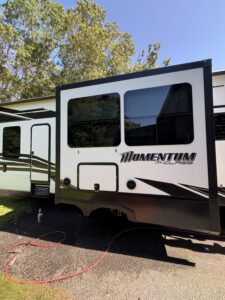
Paint correction is the process of mechanically removing surface defects — swirl marks, fine scratches, water spots, oxidation, and haze — from a vehicle’s finish using machine polishers, cutting compounds, and polishing products.
Unlike waxing or applying a sealant, which simply coat over defects and provide temporary shine, paint correction actually removes the damaged layer of clear coat or gel coat to reveal the fresh, undamaged material underneath. The result is a finish with true depth and clarity, not a surface-level shine that fades in a few weeks.
For RVs specifically, paint correction addresses two types of surfaces:
Fiberglass gel coat — the most common RV exterior material. Gel coat is a thick, pigmented resin that forms the outermost layer of a fiberglass RV. It’s durable but susceptible to oxidation, swirl marks from improper washing, and fine scratches from road debris.
Painted surfaces — some RVs, particularly higher-end motorhomes and diesel pushers, have a traditional clear coat over base coat paint system, similar to a car. These surfaces respond to paint correction in the same way as automotive paint.
Common RV Paint and Gel Coat Problems We Fix
Swirl marks. The most common defect on any RV that has been washed regularly. Swirl marks are caused by dirty wash mitts, automatic car washes, improper drying techniques, and low-quality cleaning products. In direct sunlight they create a web-like pattern across the surface that makes the finish look aged.
Fine scratches. Light scratches from tree branches, brush contact, or careless cleaning. As long as they haven’t cut through the gel coat or clear coat entirely, these can be removed through paint correction.
Water spots. Hard water contains minerals that etch into the surface when the water evaporates. Over time, water spots can become permanent if not addressed. Paint correction removes the etched mineral deposits.
Haze and dullness. A combination of light surface scratches, oxidation, and environmental contamination that makes the finish look cloudy or lifeless even after washing.
Light oxidation. The early stages of oxidation — before it becomes full chalking — appear as a general dullness and loss of color depth. Paint correction can address light oxidation as part of the polishing process.
The RV Paint Correction Process
Professional paint correction on an RV is a multi-stage process that requires the right equipment, products, and technique. Here’s how we approach it at Massachusetts Car Detailing:
Stage 1 — Wash and decontamination. We start with a thorough hand wash to remove loose dirt and debris. We then clay bar or chemically decontaminate the surface to remove bonded contaminants — tar, iron particles, tree sap — that would interfere with the polishing process.
Stage 2 — Paint depth inspection. Before any machine work begins, we use a paint depth gauge to measure the thickness of the gel coat or clear coat at multiple points across the RV. This tells us exactly how much material we have to work with and guides how aggressive we can be during correction.
Stage 3 — Cutting stage (if needed). For heavier defects and oxidation, we use a cutting compound with a wool or heavy foam pad to remove the top layer of damaged material. This is the most aggressive stage and requires careful, controlled technique to avoid cutting through the gel coat.
Stage 4 — Polish stage. After cutting, a finer polish with a softer pad refines the surface, removing any micro-scratches left by the compound and bringing out full gloss and clarity.
Stage 5 — Protection. A corrected surface is a clean surface — it’s the ideal time to apply protection. We finish with a high-quality wax, paint sealant, or ceramic coating to lock in the correction and protect the surface from future damage.
1-Step vs. 2-Step Paint Correction: What’s the Difference?
You may hear these terms when researching paint correction services. Here’s the straightforward explanation:
1-step correction uses a single product — typically a combination compound/polish — in one pass. It produces good results on surfaces with light to moderate defects and is faster and more affordable. Expect roughly 70–80% defect removal.
2-step correction uses a more aggressive compound in the first pass, followed by a finer polish in the second pass. It’s more time-intensive but achieves superior results — typically 90–95% or better defect removal. Recommended for RVs with significant swirling, scratching, or haze.
During your booking, we’ll assess your RV’s exterior and recommend the right approach based on what we see.
Why RV Paint Correction Is Different From Car Paint Correction
RVs present unique challenges compared to correcting a car or truck:
Surface area. Even a mid-sized travel trailer has many times the surface area of a car. A full RV correction is a significant undertaking that requires proper planning, staging, and the right professional-grade equipment.
Gel coat thickness. RV gel coat is typically thicker than automotive clear coat, which gives more room to work. However, it’s also a different material with different polishing characteristics — products and techniques that work on automotive clear coat need to be adjusted for gel coat.
Surface complexity. RVs have graphics, decals, trim pieces, seams, and slide-out edges that require careful masking and attention to avoid damage during machine polishing.
Roof and upper panels. Reaching the roof and upper sides of a large motorhome requires proper equipment and technique. These areas often have the heaviest oxidation due to direct sun exposure and are the most challenging to correct safely.
RV Paint Correction at Massachusetts Car Detailing
We work on all types of RVs — Class A, Class B, and Class C motorhomes, fifth wheels, travel trailers, and camper vans. Whether your RV has a fiberglass gel coat finish or a traditional painted exterior, our team has the equipment and expertise to restore it.
We serve Rockland and the entire South Shore, including Weymouth, Hingham, Norwell, Hanover, Braintree, and surrounding communities.
📍 320 Centre Ave, Rockland, MA 📞 (781) 347-5321 🕐 Open 7 days a week, 7AM–7PM
Schedule your RV paint correction appointment today →
Frequently Asked Questions
How much does RV paint correction cost in Massachusetts? RV paint correction pricing depends on the size of the RV, the level of correction needed (1-step vs. 2-step), and whether you’re adding a ceramic coating or sealant after correction. Call us at (781) 347-5321 for a free quote.
Can all scratches on my RV be removed? Scratches that haven’t cut through the gel coat or clear coat entirely can typically be fully removed. Deeper scratches that have broken through to the fiberglass or base coat cannot be corrected through polishing alone — those would require a different repair approach.
How long does RV paint correction take? Depending on the size of the RV and the level of correction required, the process can take anywhere from one full day to two days. We’ll give you a specific time estimate when you bring the RV in.
Does paint correction remove oxidation? Yes — paint correction addresses light to moderate oxidation as part of the compounding process. For heavy oxidation with significant chalking, we may recommend a dedicated oxidation removal service first.
What should I apply after paint correction to protect the finish? We recommend a ceramic coating for the longest-lasting protection — up to 3–5 years with proper maintenance. A quality paint sealant is a more affordable option that provides 6–12 months of protection. We’ll walk you through both options.
Massachusetts Car Detailing serves Rockland, MA and the South Shore. All RV detailing services are performed in our fully equipped shop at 320 Centre Ave, Rockland, MA.