
Air fresheners don’t fix car odors. They cover them up — and usually only for a few days before the smell comes right back. If you’ve tried everything and your car still smells like cigarette smoke, pet odors, mold, or something you can’t even identify, there’s one service that actually works: professional ozone treatment.
Ozone treatment eliminates odors at the molecular level. It doesn’t mask them, it doesn’t filter them — it chemically destroys them. And because ozone is a gas, it reaches places no vacuum, steam cleaner, or spray product ever could: deep inside seat foam, under carpets, inside air vents, and into every crack and crevice in your interior.
At Massachusetts Car Detailing in Rockland, MA, we use professional-grade ozone treatment as part of our interior detailing services — and for South Shore drivers dealing with stubborn, persistent odors, it’s genuinely one of the most effective services we offer.
What Is Ozone Treatment?
Ozone (O₃) is a gas made up of three oxygen atoms rather than the usual two (O₂). It forms naturally during lightning storms, which is why the air often smells distinctly clean and sharp after a thunderstorm. That scent is ozone.
In automotive detailing, we create ozone using a professional ozone generator — a device that converts ordinary oxygen in the air into ozone gas. When that gas is released inside a sealed vehicle, something powerful happens.
Ozone is one of the strongest oxidizing agents in nature. When an ozone molecule contacts an odor-causing compound — whether it’s nicotine residue from cigarette smoke, bacteria from pet accidents, mold spores from water intrusion, or volatile organic compounds from spills — it breaks apart the chemical structure of that compound through oxidation. The odor molecule is destroyed, not masked. Not filtered. Destroyed.
After the treatment cycle, the ozone gas naturally reverts back to regular oxygen (O₂), leaving no chemical residue behind. Your car is left smelling neutral — not perfumed, not chemically treated. Just clean.
What Odors Does Ozone Treatment Eliminate?
Ozone treatment is effective against virtually any organic odor source. The most common situations we treat at Massachusetts Car Detailing include:
Cigarette and tobacco smoke. The hardest car odor to remove with conventional methods. Nicotine and tar are sticky, oily compounds that penetrate every surface they touch — fabric, foam, headliner, door panels, and most critically, the HVAC system. Every time the heat or AC runs, it recirculates trapped smoke particles through the cabin. Ozone penetrates all of these surfaces and chemically breaks down the compounds responsible for the smell.
Pet odors. Dog and cat odors are caused by a combination of dander, saliva, urine proteins, and bacteria embedded deep in upholstery fibers and carpet padding. Standard vacuuming and cleaning removes surface material but rarely reaches the embedded odor sources. Ozone gas penetrates the foam and fibers that physical cleaning can’t reach.
Mold and mildew. Massachusetts vehicles are particularly susceptible to mold due to coastal humidity, wet winters, and the frequency of water intrusion from rain, snow, and open windows. Once mold takes hold inside a vehicle — usually under carpet, in the trunk, or inside the HVAC system — the musty smell spreads through the entire interior every time the air circulates. Ozone kills mold spores and eliminates the odor at the source.
Food and beverage spills. Sour milk, coffee, fast food, vomit — anything protein-based that gets into carpet and seat foam produces bacteria as it breaks down. That bacteria is what you’re smelling. Ozone kills the bacteria and neutralizes the compounds it produces.
Purchased used vehicles. One of the most common reasons South Shore drivers come to us is because they just bought a used car and it doesn’t smell right. The previous owner may have smoked, owned pets, or simply let the car sit. A professional ozone treatment combined with a full interior detail is the most effective way to reset a used car’s interior completely.
Post-flood or water damage. Any vehicle that has experienced significant water intrusion — flooded floor mats, a leaking sunroof left open in rain, a spilled water bottle that soaked under the seat — can develop a persistent musty, damp smell even after drying out. Ozone is highly effective against the mold and mildew that causes this.
Why Air Fresheners and Sprays Don’t Work
It’s worth being direct about this because a lot of drivers waste time and money on products that can’t solve the problem.
Air fresheners, odor sprays, deodorizing bombs, and scented clips all work by adding a stronger smell to compete with the existing odor. They don’t eliminate anything. As soon as the fragrance fades — which usually happens within days — the original smell comes right back, sometimes even stronger because it’s been mixed with the fragrance residue.
Enzyme-based sprays are a step up and can neutralize some organic odor sources — but they only work on surfaces they can directly contact. They can’t get inside seat foam, reach the inside of HVAC ducts, or penetrate carpet padding. They’re useful as a pre-treatment step but not sufficient on their own for severe or deeply embedded odors.
Ozone is different because it’s a gas. It expands to fill the entire sealed vehicle interior and gets into every space — including all the ones you can’t see or physically access. That’s what makes it categorically more effective than any spray or surface treatment.
Professional Ozone Treatment vs. DIY Machines
You can buy a small ozone generator on Amazon for $30–$80. So why pay for professional treatment?
There are three important reasons:
Output and concentration. Professional-grade ozone generators produce dramatically higher ozone concentrations than consumer units. The concentration of ozone is directly related to how effectively it penetrates deep surfaces like seat foam and carpet padding. A low-output consumer machine may freshen the air but won’t reach the embedded odor sources where the problem actually lives.
Safety. Ozone at the concentrations needed to eliminate severe odors is harmful to breathe. The New York State Department of Health has specifically documented the risks of consumer ozone generators used improperly in occupied spaces. Professional technicians know exactly how long to run the treatment, how to seal the vehicle correctly, and most critically, how long to ventilate the vehicle afterward before it’s safe to enter. Getting the aeration step wrong is not something you want to do with a cheap machine and no experience.
Pre-cleaning. Ozone treatment works best — and the results last longest — when it follows a thorough interior cleaning. Removing the physical source of the odor first (the bacteria, the residue, the mold) means the ozone is working on what’s left rather than fighting through layers of contamination. Our professional process combines interior deep cleaning with ozone treatment for maximum and lasting results.
The Professional Ozone Treatment Process at Massachusetts Car Detailing
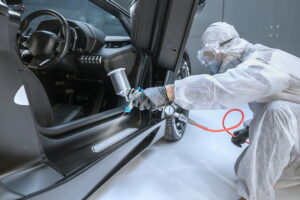
Here’s exactly what we do:
Step 1 — Interior assessment. We assess the source and severity of the odor. This helps us determine the appropriate treatment duration and whether a full interior detail is needed before the ozone cycle.
Step 2 — Pre-treatment cleaning. For most odor situations — especially smoke, pets, and spills — we perform a thorough interior cleaning first. This includes vacuuming, upholstery and carpet shampooing, and cleaning hard surfaces. Removing as much of the physical odor source as possible before ozone treatment dramatically improves results and longevity.
Step 3 — Vehicle sealing. All windows are closed, vents are set to recirculate, and the vehicle is sealed to keep the ozone gas concentrated inside the cabin during treatment.
Step 4 — Ozone generation. Our professional-grade ozone generator is placed in the vehicle and runs for a set period — typically 30 minutes to several hours depending on the odor type and severity. The gas circulates through the entire interior, into air vents, under seats, and deep into upholstery fibers.
Step 5 — Ventilation and aeration. After the treatment cycle, we thoroughly ventilate the vehicle. This is the critical safety step — allowing all the ozone gas to revert back to oxygen before the vehicle is returned to you. We don’t cut corners here. The car is fully aired out before anyone gets inside.
Step 6 — Final inspection. We do a final check of the interior to confirm the odor has been eliminated and the car is ready.
Is Ozone Treatment Safe for My Car’s Interior?
Yes — when performed correctly by a professional. Here’s what you need to know:
For your vehicle: Ozone gas is safe for automotive interiors at the concentrations and durations used in professional treatment. One precaution worth noting: extended, excessive ozone exposure can dry out rubber seals and certain plastics over time. Professional technicians calibrate run time and concentration appropriately to prevent this.
For you: Ozone is not safe to breathe at treatment concentrations, which is why the vehicle must be completely unoccupied during treatment and properly ventilated afterward. When we return your vehicle to you, the ozone has fully converted back to oxygen. It’s completely safe for adults, children, and pets.
No chemical residue: Unlike some interior treatments, ozone leaves nothing behind. It converts back to regular oxygen after the treatment cycle. There are no perfumes, no chemical coatings, no residue of any kind.
When Should You Get Ozone Treatment?
- You just purchased a used car with a smell you can’t identify or eliminate
- Your car was smoked in — by you previously or by a prior owner
- You have dogs, cats, or other pets that ride in the vehicle regularly
- Your car has a musty or mildew smell after being parked for a long time or after water intrusion
- You’ve tried air fresheners, sprays, and cleaning products and the smell keeps coming back
- You’re preparing to sell your car and want to present it at its best
- Your HVAC system blows musty air when you run the heat or AC
Ozone Treatment at Massachusetts Car Detailing
We serve Rockland and the entire South Shore including Weymouth, Hingham, Norwell, Hanover, Braintree, and surrounding communities. Whether you need a standalone ozone treatment or a full interior detail combined with ozone, we’ll find the right solution for your vehicle.
Book your ozone treatment appointment today →
Frequently Asked Questions
How much does ozone treatment cost in Massachusetts? Pricing depends on the severity of the odor and whether it’s combined with an interior detail. Call us at (781) 347-5321 for a quick quote — ozone treatment is very affordable compared to living with a car that smells bad.
How long does ozone treatment take? The treatment cycle itself runs 30 minutes to several hours depending on odor severity. Add in pre-cleaning and ventilation time, and most jobs are completed within a half day.
Will the smell come back after ozone treatment? If the source of the odor has been properly cleaned and removed beforehand, the results are permanent. Ozone destroys the odor molecules — they can’t come back. However, if the source of the odor is still present (a pet continues to ride in the car, someone continues smoking in it, a water leak isn’t repaired), the odor will return over time because new odor-causing compounds are being introduced.
Can ozone treatment remove smoke smell from a car I just bought? Yes — this is one of the most common uses. A professional interior detail followed by ozone treatment is the most effective way to eliminate cigarette smoke odor from a used vehicle. For cars that were smoked in heavily for years, a single treatment may not fully eliminate the smell, and a follow-up session may be recommended.
Is ozone treatment safe for leather seats? Yes, at the concentrations and durations used in professional treatment. As a precaution, we condition leather before and after treatment to prevent any drying effects.
How soon can I drive my car after ozone treatment? After our professional ventilation and aeration process, your vehicle is safe to drive immediately. We won’t hand you the keys until the car is fully aired out.
Does ozone treatment work on HVAC and air vents? Yes — this is actually one of ozone’s biggest advantages over surface cleaning. Running the HVAC system on recirculate during treatment allows ozone to circulate through the ductwork and eliminate odor sources inside the ventilation system that no spray or wipe can reach.