
When most people picture protective window tint, they picture dark glass.
So it makes sense to assume that the darker your car windows are, the more protection you’re getting from the sun. But when it comes to ultraviolet rays, the darkness of window tint doesn’t necessarily tell you how much UV protection the film provides.
Modern automotive window films are available in a range of shades and technologies, and some relatively light films can still provide significant UV protection.
For Massachusetts drivers who want the benefits of window tint without dramatically darkening their windows, that’s an important distinction.
Here’s what you should know about window tint, UV rays, and tint darkness.
Does Window Tint Block UV Rays?
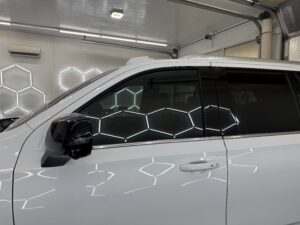
Many automotive window tint films are designed to block a significant amount of ultraviolet radiation from entering through your vehicle’s windows.
UV radiation is generally discussed in two primary categories when it comes to sun exposure: UVA and UVB.
Your vehicle’s glass already provides some protection, but the level can vary depending on the type of glass and where it’s located on the vehicle. Adding quality automotive window film can provide an additional layer of UV protection.
Exactly how much UV a particular tint blocks depends on the film itself, which is why it’s important to look at the specifications of the product rather than judging it by appearance alone.
Does Window Tint Have to Be Dark to Block UV Rays?
No.
This is one of the biggest misconceptions about automotive window tint.
Visible darkness and UV protection are not the same measurement.
The darkness of window tint is related to how much visible light passes through the glass and film. UV rejection describes the film’s ability to reduce ultraviolet radiation.
Because they’re measuring different things, a darker-looking film isn’t automatically providing better UV protection than a lighter film.
Depending on the product, a relatively light window film may still be designed to provide strong UV rejection.
What Does Window Tint Percentage Actually Mean?
Window tint percentages generally refer to visible light transmission, often shortened to VLT.
VLT tells you how much visible light can pass through the tinted window.
A film or window combination with a higher VLT allows more visible light through and therefore appears lighter. A lower VLT allows less visible light through and appears darker.
This measurement is important when choosing the appearance of your tint and determining whether the finished installation complies with applicable Massachusetts window tint requirements.
But VLT alone doesn’t tell you everything about a film’s UV or heat-rejection performance.
UV Protection vs. Heat Rejection: Are They the Same Thing?
No — and this is another distinction worth understanding.
UV rejection describes how effectively the film reduces ultraviolet radiation.
Heat rejection involves reducing solar energy that contributes to heat entering the vehicle.
A film can perform well in one category without having identical performance in another. That’s why choosing window tint based only on how dark it looks can be misleading.
If UV protection or heat reduction is a priority, ask about the actual performance specifications of the film you’re considering.
Can Clear or Very Light Window Film Provide UV Protection?
Certain automotive films are designed to provide UV protection while remaining relatively light or nearly clear.
This can be appealing to drivers who want additional protection from UV exposure but don’t necessarily want the appearance of very dark windows.
It may also be useful when you’re considering windows where maintaining visibility and a lighter appearance are priorities.
However, the exact performance varies by product. Always check the manufacturer’s specifications for the particular film being installed.
Why Does UV Protection Matter Inside a Car?
UV exposure doesn’t only affect the people inside a vehicle.
Over time, sunlight can also contribute to fading and deterioration of interior materials.
Your dashboard, seats, trim, leather, upholstery, and other surfaces are regularly exposed to sunlight through the vehicle’s glass — especially if your car spends a lot of time parked outside.
Window film with UV-rejection properties can provide an additional layer of protection for the vehicle’s interior while also reducing UV exposure for occupants.
Does Factory-Tinted Glass Block UV Rays?
Factory-tinted or privacy glass and aftermarket window tint film aren’t necessarily the same thing.
Many SUVs, trucks, and other vehicles come with darker rear glass from the manufacturer. In some cases, the darker appearance comes from pigment within the glass rather than an aftermarket film applied to its surface.
That darker appearance doesn’t automatically tell you its UV or heat-rejection performance.
If UV protection is one of your main reasons for tinting your vehicle, a professional installer can help you understand what your existing glass provides and whether adding an automotive window film makes sense.
Is Darker Window Tint Better?
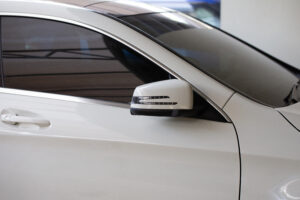
Not necessarily.
The “best” window tint depends on what you want from it.
One driver may prioritize privacy and prefer a darker appearance. Another may care more about UV rejection and heat performance while wanting to keep the windows relatively light.
There are also visibility and legal considerations when choosing how dark to go.
Instead of automatically selecting the darkest option available, consider the film’s performance, your driving habits, the appearance you want, and applicable Massachusetts tint requirements.
What Should You Look for When Choosing Window Tint for UV Protection?
If UV protection is a priority, don’t choose your tint based solely on shade.
Ask about the film’s UV-rejection specifications and how different film options compare.
You can also consider factors such as heat rejection, glare reduction, clarity, durability, and visible light transmission.
A professional installer can help you compare those factors and choose a film that fits what you’re actually trying to accomplish.
Mobile Window Tinting in Massachusetts
You don’t have to choose extremely dark windows to explore the benefits of automotive window film.
Massachusetts Car Detail provides professional mobile window tinting for Massachusetts drivers, making it easier to choose a film based on the appearance and performance you’re looking for — including UV protection.
And because the service comes to you, you can have your windows professionally tinted at your home or another suitable location without spending part of your day waiting at a tint shop.
Interested in window tint for UV protection? Contact Massachusetts Car Detail to learn more about our mobile window tinting options and schedule your service.